Krishnamoorthi and Ramirez Lead 12 House Members in Demanding Answers on Trump Administration Plan That Risks Housing for Tens of Thousands of Veterans
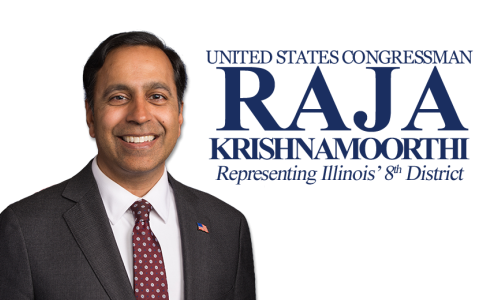
WASHINGTON – Last week, Raja Krishnamoorthi (D-IL) and Congresswoman Delia Ramirez (D-IL) led 12 House Members in urging the Departments of Veterans Affairs (VA) and Housing and Urban Development (HUD) to explain a Trump Administration budget proposal that could destabilize core housing assistance programs that veterans rely on nationwide.
In a letter dated Tuesday, November 25, the lawmakers write that they are “deeply concerned about the creation of a new program titled Bridging Rental Assistance for Veteran Empowerment (BRAVE) in the fiscal year (FY) 2026 Department of Veterans Affairs (VA) budget proposal.” They note that “according to President Trump’s FY 2026 Budget Request, BRAVE seemingly requires the reallocation of all resources from the Housing and Urban Development VA Supportive Housing (HUD-VASH) program – a total of $1.1 billion in discretionary resources.”
The Members warn that “the reallocation of federal funding from HUD-VASH to BRAVE threatens to destabilize a proven housing assistance program and puts more than 112,000 VASH vouchers dedicated to veterans at risk.” They emphasize that HUD-VASH is a long-established partnership between HUD and the VA that “combines rental assistance with case management and supportive services in order to help homeless veterans and their families obtain permanent housing and access the health care, mental health treatment, and other supports necessary to help them improve their quality of life and maintain housing over time,” and that “HUD-VASH has served more than 175,000 veterans since 2008.”
The lawmakers argue that dismantling HUD-VASH to create a new, undefined program is unjustifiable: “Reallocating resources from HUD-VASH in order to establish a vague and ill-defined program is reckless and irresponsible. HUD-VASH is a long-standing housing assistance program which has been vital to our nation’s most vulnerable veterans for decades.” They also warn that, despite its massive implications, “the VA FY 2026 budget request devotes only 10 lines to describing the new BRAVE initiative” and “provides no discernible administrative or organizational structure, distribution system, or performance guardrails.”
Their concerns deepen given that “the Trump Administration has proposed a 51 percent reduction in HUD’s budget.” The Members write that the FY 2026 proposal “does not address how the across-the-board cuts will impact veterans whose housing depends on HUD rental assistance, including the estimated hundreds of thousands of veterans who rely on HUD rental assistance programs other than HUD-VASH.” As a result, they conclude, “there is no clear plan to ensure veterans’ housing stability if HUD-VASH or other housing assistance programs are abruptly defunded. Absent answers to these questions, Congress cannot responsibly authorize such a significant reallocation of resources.”
The lawmakers underscore that destabilizing housing for veterans is unacceptable: “Veterans’ housing stability must never be subject to uncertainty due to reckless planning, indifference, or ill-advised experimentation. Our veterans have made extraordinary sacrifices in defense of our country. In return, we have a moral and civic obligation to provide them with consistent, reliable access to safe housing and essential support services.” They warn that “pursuing a programmatic transition that could put veteran housing at risk would be a profound failure of leadership and governance.”
To ensure transparency and protect veterans from losing housing support, the Members request direct answers from VA and HUD no later than December 12, 2025, asking:
- What will be the organizational structure of the BRAVE program? What will its leadership and administrative structure be, and through what agency or interagency will it operate?
- What will happen to the existing institutional structures operated by HUD-VASH? How will HUD-VASH staffing, service delivery, and housing agency partnerships be preserved?
- What mechanisms will be in place to avoid gaps in housing assistance for veterans currently supported by HUD-VASH?
- How many veterans are housed by or receive other forms of HUD assistance? Please provide a detailed breakdown of veterans served by each HUD program. Please also provide a detailed explanation of how these veterans will continue to access housing assistance if the BRAVE program and HUD budget cuts are implemented.
- How will VA’s legislative proposal ensure all HUD-VASH beneficiaries are seamlessly transitioned into BRAVE, without housing loss or interruption in their care? What accountability measures will be put in place to ensure BRAVE funds are used effectively and transparently?
- What mechanisms will be incorporated into VA’s legislative proposal for congressional oversight of BRAVE’s rollout and performance, if it proceeds? How will Congress be informed of and involved in the phase-out of HUD-VASH?
The lawmakers close by reiterating that “our budgets should reflect our commitments to veterans, while upholding accountability and service continuity. We urge you to treat this matter with the urgency and transparency our veterans deserve.”
This letter was led by Reps. Raja Krishnamoorthi (IL-08) and Delia Ramirez (IL-03), and also signed by:
- Rep. Greg Casar (TX-35)
- Rep. Herb Conaway Jr., M.D. (NJ-03)
- Rep. Dwight Evans (PA-03)
- Rep. Dan Goldman (NY-10)
- Rep. Steven Horsford (NV-04)
- Rep. Jonathan Jackson (IL-01)
- Rep. Stephen Lynch (MA-08)
- Rep. Sarah McBride (DE-AL)
- Rep. Chris Pappas (NH-01)
- Rep. Marilyn Strickland (WA-10)
The letter is available here.