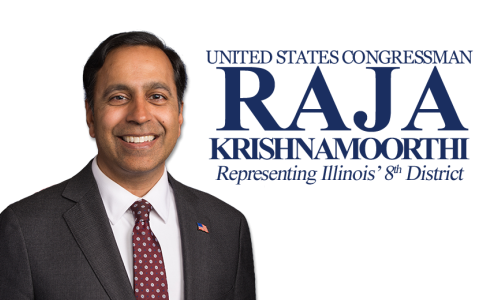
Congressman Krishnamoorthi Sounds Alarm Over DOJ Diverting FBI Counterterrorism and Counterintelligence Resources to Mass Immigration Raids
WASHINGTON — Congressman Raja Krishnamoorthi (D-IL) today sent a letter to FBI Director Kash Patel raising serious concerns that the Department of Justice has diverted FBI counterterrorism and counterintelligence personnel away from their core national security missions and reassigned them to support mass immigration enforcement operations, putting the United States at risk. In the letter, Congressman Krishnamoorthi warned that senior DOJ officials have redirected personnel and assets from the FBI’s core mission despite the Bureau’s own assessment that terrorists and nation-state adversaries pose the most immediate threats to the homeland:
“Over the last year, senior officials have reassigned personnel and assets from the Federal Bureau of Investigation’s (FBI) core national security mission to immigration enforcement, leaving counterterrorism and counterintelligence work compromised and putting our national security at risk.”
The letter cites reporting that early in 2025, DOJ leadership directed FBI Joint Terrorism Task Forces to assist with immigration initiatives, requiring agents responsible for terrorism investigations, espionage detection, and cyber threat monitoring to prioritize immigration enforcement over national security work:
“Agents responsible for espionage detection cyber threat monitoring, and terrorism investigation, therefore, were required to prioritize immigration enforcement, giving less attention to crucial national security threats.”
Despite a rise in alleged terrorist incidents across the United States, the letter notes that a significant share of the Bureau remains diverted:
“Nearly a quarter of the FBI’s roughly 13,000 agents nationwide, and up to 40 percent in the largest field offices, remain assigned to immigration enforcement duties.”
Congressman Krishnamoorthi further highlighted reporting that analysts tracking terrorist financing, money laundering, and the illicit trade in looted antiquities, as well as investigations into the Iranian oil black market used to finance terrorism, have been delayed by months:
“Internal sources further indicate that these core national security investigations, including into the black market for Iranian oil sold to finance terrorism, have been delayed by months.”
According to additional reporting cited in the letter, the diversion of counterterrorism and counterintelligence personnel has halted critical investigations:
“The shift of resources from counterterrorism and counterintelligence teams, including many FBI personnel working years-long complex investigations involving classified techniques and sources, have caused several critical investigations to stop.”
The letter also raises alarm that counterintelligence specialists with deep expertise on China, Russia, and Iran have been reassigned to immigration cases, limiting enforcement of the Foreign Agents Registration Act and allowing foreign intelligence operatives greater freedom to operate inside the United States:
“These shifts have limited investigations into violations of the Foreign Agents Registration Act and have allowed foreign intelligence operatives greater room to maneuver within the United States.”
Emphasizing the FBI’s statutory mandate, the letter warns:
“Its counterintelligence and counterterrorism components exist to detect and disrupt the activities of hostile foreign actors, not to conduct civil immigration enforcement or unrelated administrative duties.”
In light of these concerns, Congressman Krishnamoorthi asked the FBI to promptly provide detailed answers to the following questions:
To what extent have FBI personnel assigned to counterintelligence, counterterrorism, or related national security missions been redirected to assist with immigration enforcement or other non–national security duties?
How have these reassignments affected FBI’s ability to investigate and disrupt espionage, terrorism, cyber intrusions, and other national security threats?
Have any ongoing national security or counterterrorism investigations—such as the probe into the Iranian oil black market or cases involving foreign influence operations—been delayed, suspended, or deprioritized because of these diversions?
Were formal operational risk assessments or impact analyses conducted prior to redirecting these agents, and if so, what did they conclude?
What steps, if any, has the Bureau taken to return these personnel to their original counterintelligence and counterterrorism assignments and to restore full operational readiness in these mission areas?
What mechanisms or internal controls will be implemented to prevent future diversions of national security resources for purposes unrelated to the FBI’s statutory counterintelligence and counterterrorism missions?
Congressman Krishnamoorthi's letter is available here.